
Signs Your Security Screens Need Replacing
Security screens play an important role in keeping your home comfortable, ventilated and protected from unwanted visitors. They allow fresh air to circulate while helping keep insects outside, and quality security screens provide an additional barrier against forced entry. However, even well-made screens can deteriorate over time, and although some issues can be resolved with straightforward repairs, others indicate that your existing screens may no longer offer the performance you need.
Knowing what to look for can help you decide when maintenance is sufficient and when replacement makes more sense. Here are six signs that your security screens could be ready for an upgrade.
1. The Frame Is Corroded, Bent or Loose
The frame carries the load if someone tries to force a screen, which makes it the most important component to assess. Run your hand along the corner joins and edges. Look for bubbling or flaking paint, white powdery residue on aluminium, rust on steel, and gaps where the frame meets the opening.
Loose fixings can be tightened and a slightly loose panel can be refitted. Corrosion at the joins or a frame that has bent out of shape is a different matter, because the damage weakens the structure and repairs will not hold. Humidity speeds this process up, and homes closer to the bay also deal with salt in the air. If the frame is compromised, replacement is the reliable fix.
2. The Door No Longer Closes or Latches Properly
A security door should swing freely, close evenly and latch the first time. Try closing yours slowly and watch where it catches. Also check whether the gap between the door and frame is even on all sides, and whether the lock turns smoothly with the key.
Start with the simple fixes such as tightening the hinge screws, adjusting the hinges and realign the strike plate, since these resolve many sagging doors. If the door still drags or needs a lift to latch after that, the frame has probably moved out of square or the lock components have worn. A door that cannot lock securely every time is no longer doing its job, and a new door restores correct operation.
3. The Mesh Is Torn, Cut or Pulling Away From the Frame
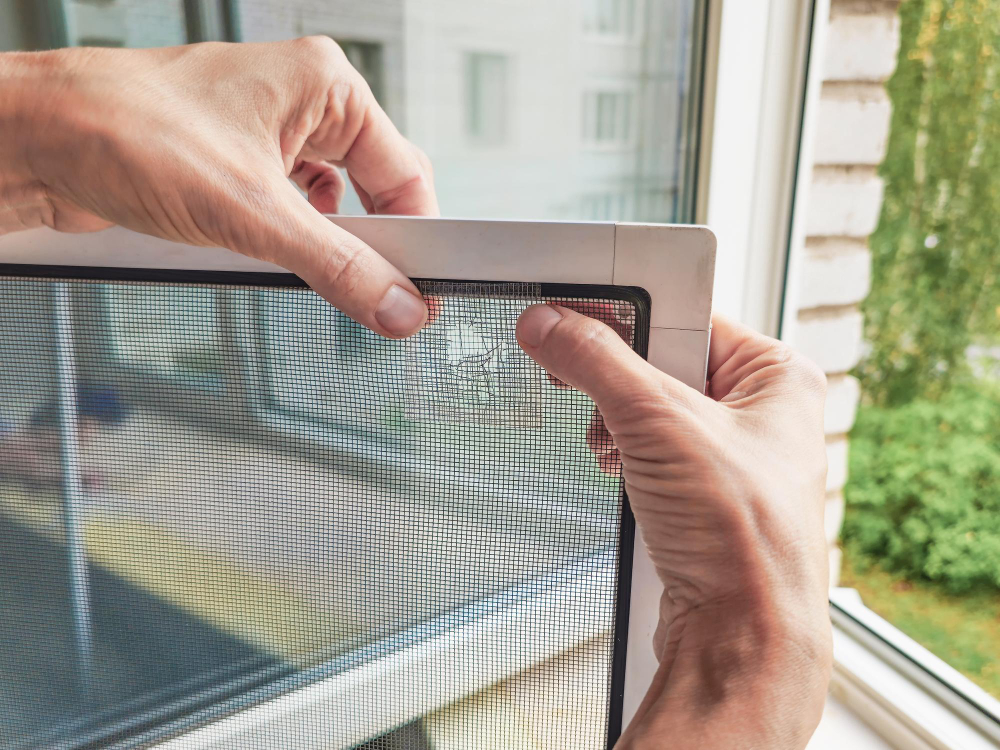
Press a finger gently across the mesh and follow the edges where it meets the frame. Look for tears, frayed strands, dents and any section that has lifted away from its channel. Where the damage is a single tear in an insect screen, a patch or re-mesh is a sensible repair. Security mesh behaves differently as its strength depends on being intact and firmly anchored, so cuts, pulled edges or distortion reduce the protection of the whole panel. If the mesh is damaged but the frame is sound, re-meshing the panel can work. If both are affected, replace the screen.
4. The Mesh Has Degraded From Sun Exposure
Colour fade, a chalky or uneven surface and mesh that feels brittle or breaks under light pressure all point to long-term UV exposure. West facing doors and windows tend to show this first because they take the harshest afternoon sun.
Degradation from sunlight affects the whole panel evenly, so repairing one section leaves the remaining mesh with the same weakness. Different mesh materials have different finishes, so a change in appearance on its own does not confirm a problem. Wear that comes with brittleness, fraying or tearing does. In that case the panel is nearing the end of its life and should be replaced.
5. Insects Are Getting Inside Despite Closed Screens
Mosquitoes and flies that keep appearing in a room with closed screens point to gaps you cannot see in normal light. Try this check at dusk with an interior light on. Stand outside and look for light escaping around the edges, then inspect the corners, the seals and the bottom track of sliding screens.
Worn seals and brush strips are inexpensive to replace and often solve the problem. If gaps remain after new seals go in, the frame no longer sits square in the opening, and it will keep letting insects through. When several screens around the house show the same pattern, replacing them is usually more economical than repairing each one in turn.
6. The Screens Were Built to Keep Out Insects, Not Intruders
Many older homes have flyscreen doors and basic mesh screens that look similar to security screens and are often confused as such. A flyscreen has a lightweight frame, thin mesh and a simple latch, and it provides no real resistance to forced entry. A security screen is engineered with a robust frame, security-grade mesh, secure fixing and a quality lock.
To find out which you have, check for a compliance label and ask the manufacturer or installer for evidence of testing to Australian Standard AS 5039, which covers security screen doors and window grilles and includes testing for impact, probing and knife shear. If your screens cannot show that evidence, they will not give the protection you may be assuming they do. Upgrading these openings is a worthwhile investment, particularly for doors and windows that are out of sight from the street.
So, Does Your Screen Need a Simple Repair Job or Full Replacement?
- Repair: one damaged section of insect mesh, worn seals, loose fixings, hinge or latch adjustments.
- Replace: corroded or bent frames, doors that will not lock securely, widespread mesh degradation, damaged security mesh, or screens that were never rated for security.
- Upgrade: if two or more of these signs appear across several screens, replacing them together keeps the look consistent and avoids repeated repair costs.
Security screens need to do more than keep insects out. They should fit properly, operate smoothly and provide the level of protection your home needs. If your existing screens are showing several signs of wear, our team can help you choose a suitable replacement. Contact our team on 0401 111 167 to arrange an assessment and a quote for your property.